
Why Diversity, Equity & Inclusion Are Reshaping Recruitment in Manufacturing and Beyond
As President of P3 Printing, Packaging & Paper Executive Recruiters, I have seen firsthand how Diversity, Equity, and Inclusion, often referred to as DEI, continue to reshape how organizations attract, evaluate, and retain talent. Forward-thinking companies are no longer viewing DEI as a standalone initiative, they recognize it as a strategic driver of innovation, workforce stability, leadership development, and long-term business performance.
In highly competitive markets, particularly across manufacturing, printing, packaging, and paper, access to skilled talent remains one of the greatest challenges leaders face. Organizations that broaden their perspective and create inclusive environments gain access to deeper talent pools, stronger engagement, and more resilient teams.
At P3, we actively partner with clients to strengthen diverse candidate pipelines, implement objective hiring practices, and support inclusive workplace cultures. The goal is simple, ensure that qualified individuals from all backgrounds have equitable access to opportunity and the ability to thrive.
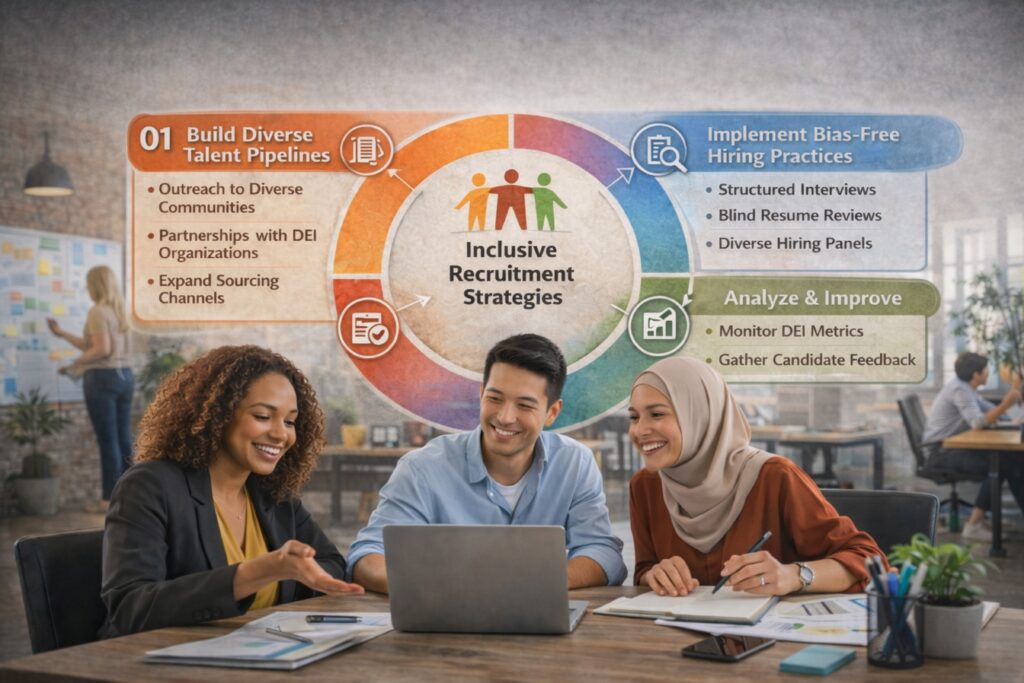
1. Building Broader and More Diverse Candidate Pipelines
Strong hiring outcomes begin with intentional sourcing. Building diverse pipelines means expanding where and how talent is identified while remaining focused on capability, potential, and cultural alignment.
Broadening outreach:
We actively engage with professional organizations, industry associations, technical networks, and community partners that promote workforce access and inclusion. Leveraging both in-person events and digital platforms allows us to connect with qualified professionals who may historically have been overlooked or underrepresented in certain functions or markets.
Inclusive job messaging:
Well-written job descriptions matter. We encourage clients to use inclusive language, emphasize core competencies, and reduce unnecessary credential barriers that may unintentionally limit strong candidates. When expectations are clear and accessible, more qualified professionals feel confident raising their hand.
Diversity of background and experience strengthens decision-making, operational excellence, and leadership effectiveness across organizations.
2. Implementing Objective and Unbiased Hiring Practices
Even well-intentioned hiring processes can introduce unconscious bias. Structured, consistent evaluation methods create fairness while improving hiring quality.
Skills-focused screening:
Evaluating candidates based on experience, performance history, and transferable skills keeps the focus on what truly drives success in the role.
Structured interviewing:
Standardized interview questions and consistent evaluation criteria create a more balanced assessment process. Diverse interview participation also strengthens perspective and reduces individual bias.
When hiring decisions are anchored in objective data and clearly defined competencies, organizations make stronger, more defensible selections.
3. Fostering Inclusive and High-Performance Work Environments
Hiring diverse talent is only the first step. Retention and engagement depend on creating environments where people feel respected, supported, and empowered to contribute.
Leadership awareness and development:
Ongoing education around communication styles, leadership behaviors, and unconscious bias strengthens collaboration and trust. Inclusive leadership improves team performance and employee confidence.
Connection and belonging:
Employee resource groups, mentorship programs, and peer networks provide meaningful opportunities for connection, development, and shared learning. These programs reinforce engagement and long-term commitment.
Inclusive cultures consistently outperform because people feel valued and aligned with the organization’s purpose.
The Business Case for DEI in Today’s Talent Market:
Organizations that embed DEI into recruiting and leadership practices gain access to broader talent pools, stronger innovation, and healthier cultures. They also position themselves as employers of choice in increasingly competitive labor markets.
As executive recruiters and talent advisors, we believe the future of workforce success depends on intentional hiring practices, inclusive leadership, and continuous investment in people. When companies commit to building opportunities for all qualified professionals, the result is stronger teams, better business outcomes, and sustainable growth.
Together, we can build organizations where diversity strengthens performance, inclusion becomes standard practice, and opportunity is driven by talent, contribution, and potential.
About the Author
Gary Bozza is the founder of P3 Executive Recruiters, established in 1997. Recognized for his ability to get results, he has been building high-performance leadership teams for four decades on both hiring and recruiting sides. Gary and his team are dedicated to helping Owners, CEOs, Presidents and Private Equity Firms maximize the effectiveness of human capital resources, drive profitable growth, while building enterprise value. Their proven and rigorous search methodology consistently produces timely, strong results. They were recently recognized by Forbes as one of “America’s Best Recruiting Firms”.